
Kicking Tires
When we spend a lot of time looking at data, do we actually get better outcomes?

If you haven’t been watching all the worst types of humans are trying to date each other on television. I am, of course, talking about Love Is Blind (Netflix’s #1 unscripted show of the last two years, with last season totaling over 1.1 BILLION minutes watched).

Finding love is sort of the only space where you can put people into horrible situations — and that’s because it is so TERRIBLE/TIME-CONSUMING/ETC. trying to find love. There’s way too much data (longer profiles in apps), way too many choices (there’s a bunch of different apps), and a ton of incentive to lie! And those lies turn into even worse outcomes (cheating, divorce, etc.)!
Dating is the worst it’s ever been…right???
If you know any single people, they will tell you “it’s horrible out there.” Around 47% of U.S. adults say dating is harder now than it was 10 years ago and roughly 78% of Americans who used a dating app in the last year report some level of burnout. It’s bad out there! It’s gotten so bad all these weird dating trends keep popping up to “outsmart” the system.
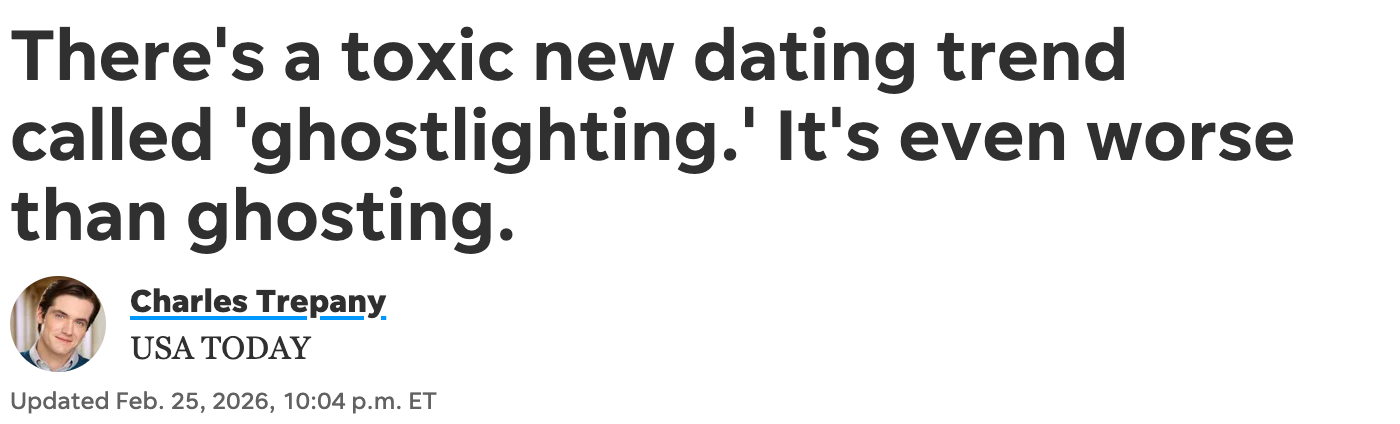
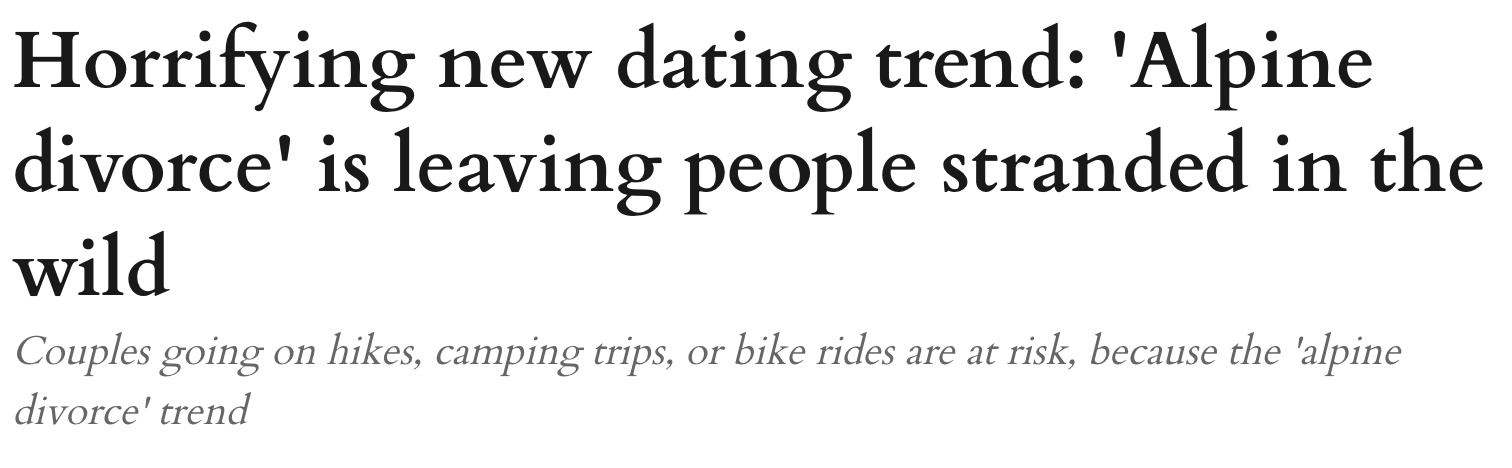
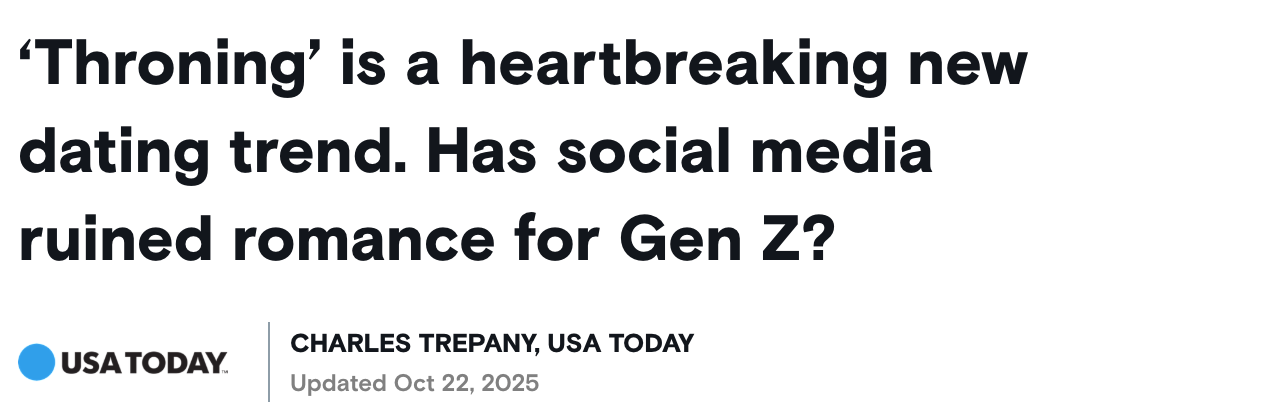
Ed Note: Also shout out Charles Trepany for exclusively being on the “new dating trend” beat for USA Today.
But dating outcomes are actually improving?? (Ed. note: I’m going to use marriage as the desired outcome here, even though I know not all people date to end up in marriages, but let’s assume it’s the stated goal outcome for many people dating).
Let’s first talk about how difficult dating is from a “time consumption” standpoint — what’s being reported is the absolute amount of work that people are putting into the apps in order to get any type of outcomes (all data, than otherwise stated from this article from Tankify):
Over 10% spend 1–2 hours just building or tweaking their profiles.
Your top users average ~40 swipes per match.
Then a week or more from matching to meeting in person in real life
THEN, 41% say they’ve spent more time getting ready for that date than the date lasted (note: women spend 45% more time getting ready for dates than men)
THEN, you repeat that process over and over again to get a significant other — one large U.S. survey (about 1,000 people who met partners on apps) estimated it takes around 3,960 swipes and roughly eight months on apps to find a potential significant other.
AND AFTER THAT, you have to keep dating until you get out of the “what are we?” stage! Usually, 5-10 dates before a couple becomes official.
FURTHERMORE, you are likely in the range of 2-4 of those serious partners before you find your eventual spouse. This comes out roughly to 300-400 matches or 12,000-16,000 swipes to find a spouse (note: the typical Tinder user average 10-100 swipes/session, the typical Bumble user is closer to 110 swipes per day).
TOP THAT OFF, that maybe, MAYBE you want to get married? Well that’s taking even longer too, with courtship before engagement now taking 2–5 years, up from roughly 1–2 years in the 1970s
It’s a very long path from swiping to marriage!
At any point you are 5-6 months away from a significant other and only another 3 years after that to get a spouse! Get out there and get swiping!
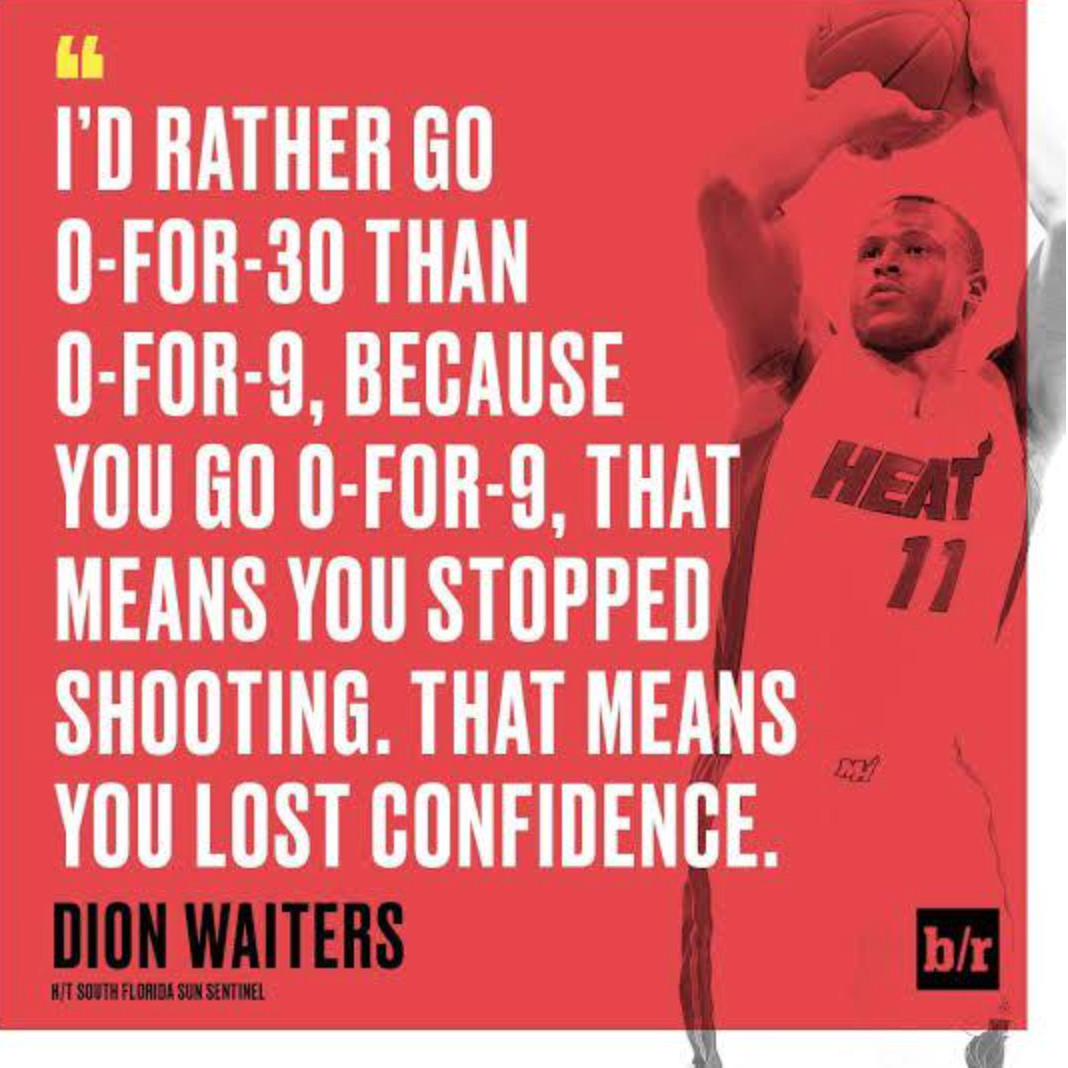
But then, all that data, all that dating, all that swiping — we have more content than ever to “make the right choice” — are we making the right choices?
It turns out, yes. Fewer people are getting divorced as dating apps climbed (U.S. divorce rates peaked around 1980 and have since declined; from 2011 to 2021, divorce fell from 9.7 to 6.9 divorces per 1,000 women). More data and more people and better data is creating better matches! Dating may be worse to experience, but maybe we are taking all this information to create improved outcomes.
Are More Options Helping Us Elsewhere?
Car buying has a lot of the same contours of dating:
He said he was 6’ 1”! | A 2026 dealer/consumer survey found that while 81% of buyers used online research tools for pricing and payments, only 48% felt the final in‑store numbers matched what they saw online.
I met her IRL and she was terrible! | A separate consumer survey found that 56% “enjoy shopping for cars online,” but only 26% “enjoy the actual purchase process at the dealership.”
It’s taking longer and longer to find a good match! | 38% of respondents said the process took longer than expected, up from 29% a year earlier
But where did the outcomes land here?
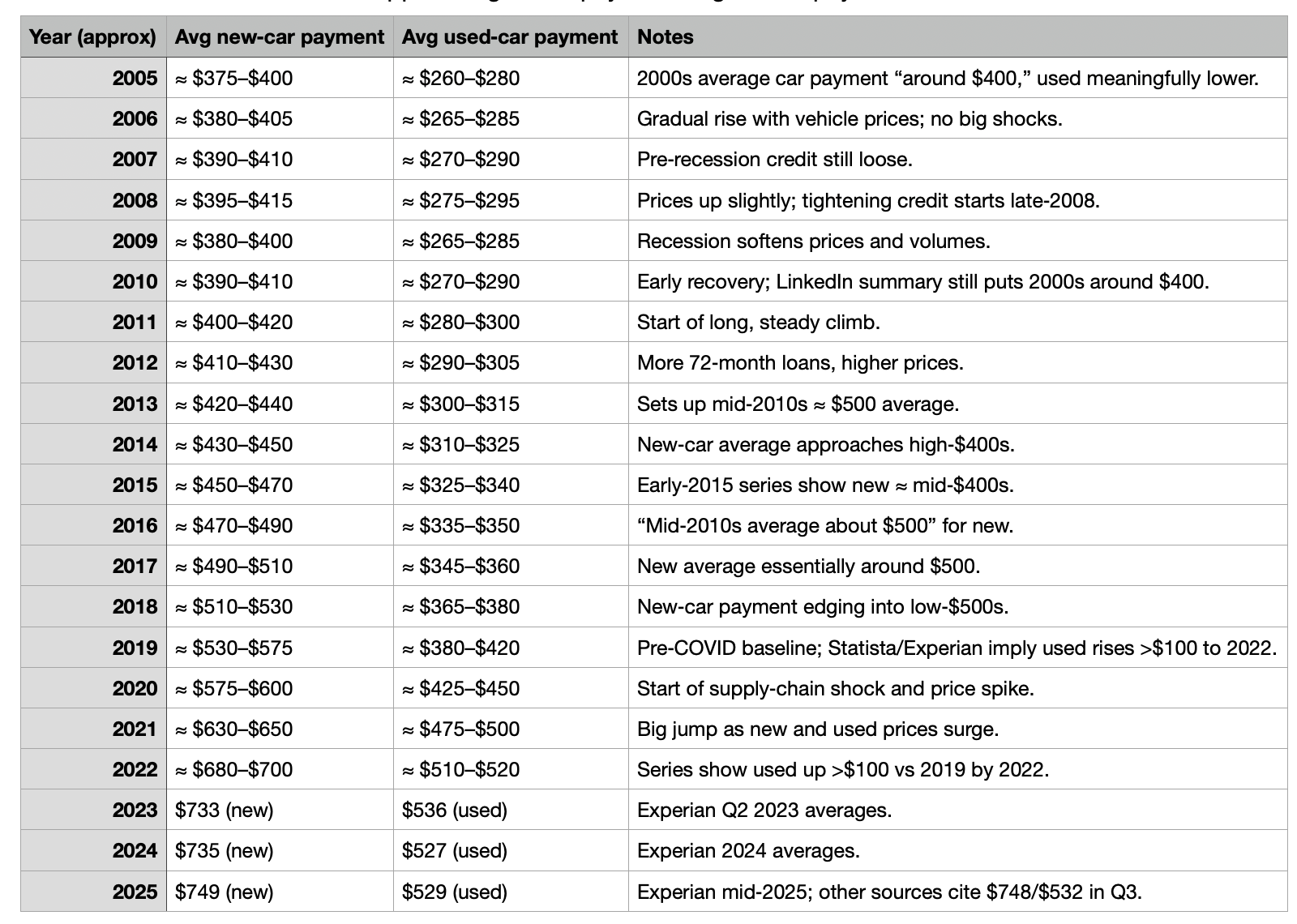
The average payment for a car has climbed and user satisfaction has plummeted - a June 2025 national survey of recent buyers found overall satisfaction with the purchase process fell 12 index points year‑over‑year, hitting the lowest level since the index began.
But also, durations to keep cars are higher than ever (average vehicle age in 2005 was ~9 years, in 2025 it was 12-13 years). And were users satisfied? From JD Power…
New-vehicle owners today are more passionate about their vehicle than ever, according to the J.D. Power 2025 U.S. Automotive Performance, Execution and Layout (APEAL) Study, released today. Overall satisfaction is 851 (on a 1,000-point scale), an increase of 4 index points from a year ago and the highest level since the study was last redesigned in 2020.
Scores in all 10 categories in the study improve compared with last year—an achievement for the industry that has not occurred in almost a decade. The gains are led by a 13-point improvement in satisfaction with fuel economy, followed by infotainment and interior, which each increase by 6 points.
More data for choices creates better outcomes overall — even if it feels terrible to go through those choices.
Now you’re saying — “well this is all cherry picked data” — but more data is leading to better outcomes in a variety of high volume data places:
Research on online reviews for large household appliances finds that review‑driven decision making improves perceived performance and satisfaction and reduces post‑purchase regret
College Board and related outreach experiments show that giving students clear, targeted information on net price and admissions (reducing search and information costs) shifts them toward better‑matched, often higher‑graduation‑rate institutions, improving longer‑term degree outcomes.
Studies on hospital and provider choice show that when people consult publicly reported quality measures (readmission rates, complication rates, patient experience scores), they are more likely to select higher‑quality hospitals, which is associated with lower complication risks and better outcomes on average.
Better data is winning — our lives are getting better, but it’s still an INSANE PAIN to process all this information, I wish someone made robots to help us process a lot of data quickly…
The End of Manual Data Processing in Dating
The limiting factor in both dating, car buying, surgery planning, college admissions, and buying an appliance is time — we don’t have endless time to process endless data. So when we do it, it feels endless and sisyphian. But for dating as an example what if I told you people were leading the way on reducing that cognitive load? Here they are in order from most invasive and least invasive (my opinion):
People-based Virtual Dating Assistants | For sites like VirtualDatingAssistants.com people will pay other people $380-$1,320/month (based on package and how many “guaranteed dates” you buy) to respond to dating messages on profiles. Let’s hear from the founder himself:
Valdez’s company is meeting a very real, albeit very niche, market demand. ViDa currently operates on every major dating site, has roughly a hundred clients, and, according to Valdez, takes in close to six figures a month.
Using a service like this raises obvious transparency and ‘Multiplicity‘-esque ethical concerns, but while Valdez admits that he operates “in a little bit of an ethical gray area,” he believes “overall our service does a lot more good than it does bad.”
He continues on his idea:
I had an assistant at work, but I obviously couldn’t ask her to online date for me, so I had an idea that I could get another assistant with a writing background who could do this for me.
AI-based Virtual Dating Assistants | Rizz is an app and was named one of Time Magazine’s Top Inventions of 2024 (?!?!?!?). It essentially works as a GPT-wrapper that intakes information from dating coaches to help train the model to give you a better response for “every single conversation".” (Ed. note: I tried to watch this founder’s interview and I think it’s a pretty painful watch for a guy who supposedly built a dating response app…)
AI dates for you | Apps like Volar or Known will date (other AI chatbots) for you! They’ll send you matches faster by eliminating the upfront work of chit-chat and gets to real matches. What is fascinating about Known, is rather than monetizing how many people you see — they monetize IF you want to go on a date.
You date AI | Tool like Eva will allow you to date an AI (they even have their own cafe!). We’ve talked about this a bit before on this blog about the dangers of dating AI tools (spoiler alert: we will have more soon on it as well). But this seems like the worst of all worlds — you date a system that is predisposed to agree with you:
Agreeableness is also one of the “Big Five” personality traits that lead to long-term relationship success. We love the idea that in our relationships that we have agreeable partners and that agreeableness is what can create long-lasting relationships.
But that’s the problem with tools that only give you positive results and talk to you – that is the subversiveness of Aspect, but at least it is very open about it’s aims — is that when you get exactly what you receive you spend a LOT more time on the application and suddenly you are a LOT more valuable to advertisers. Now think about these systems at work or in your personal life (e.g., for therapy), or even in your relationships (Ed note: I know I link a lot of articles in my Substack, you should read this particularly insane article).
Middlemen Emerge, Privacy Retreats
What is happening on the dating technology space is probably a pretty good allegory for what comes next in a lot of places. We want to separate two really key items here:
Data Intake - This is intaking all the public (read: usually digital) information — this can be reviews, specifications, rankings, advertising, etc.
Data Experience - This is data that is personal to you — how you perceive the data. This can be “how do I feel about this deal?” “Do I feel I am getting a good deal?” “Do I like this person?” “Are the vibes good here?”
What is critical to understand is that all we are processing is the data intake part, not the data experience part (that’s why AI dating is so weird, it’s ceding the “experience” part to robot). Essentially, the complexity of gathering initial data and processing “best fits” should likely be done by systems (it’s burning us out anyway), but the dating / test drive / college campus visit / etc. — should still be done by humans! We are still very good at understanding fit (and why dating still exists!).
If you abstract the “data processing” part from the “data experience” part, this creates an opportunity for better outcomes for all parties.
So what to do with all of this data processing capability? The answer is that you’ll likely see newer business models emerge that benefit completing transactions faster and earlier. Imagine a world where:
Car buyers’ AI agents are given a “shared finders fee” that aligns interest between car buyers and dealerships
AI assistants that match you with a good fit and then pay you to go on dates!
Colleges that offer you admission and scholarship before you apply (aka NIL for the average student)
New business models that incentivize suppliers to match faster and/or better benefits us all. And, on the other hand, systems that will incentivize users to provide AS MUCH information as possible to make these transactions occur at high speed and high quality.
That’s the tradeoff you’ll have to make to never swipe again.