
Robots Nudging You Forward
Imagine where you receive minute-by-minute feedback from your manager? I tried the new Limitless AI pin and it’s closer than you think.

What is Limitless?
I recently purchased an AI pin from Limitless, which touts that “you’ll never forget anything.” The pin is about the size of a quarter and continuously records conversations. The idea being that you can utilize natural voice processing to update your to-do list, remember who you met at a conference, etc.
The problem is that it is recording all your conversations.
From the mundane:
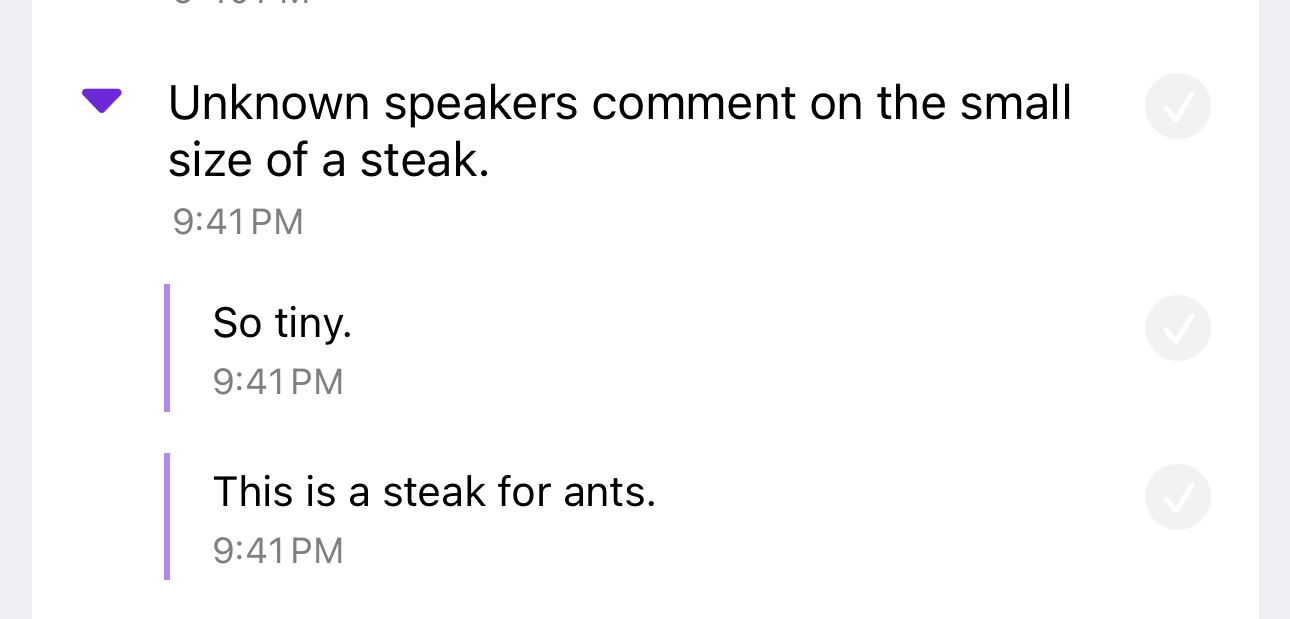
To some of my best parenting work:
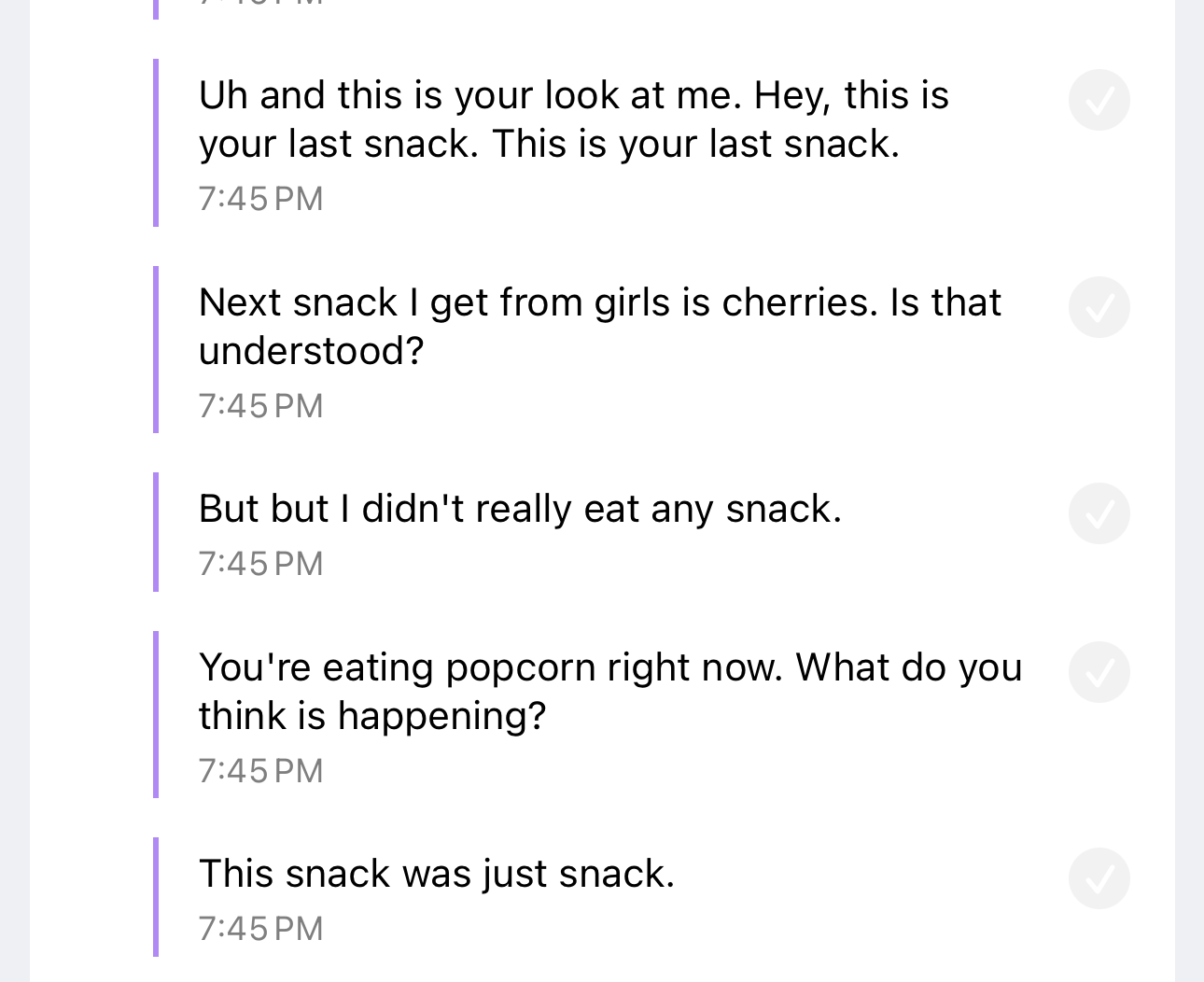
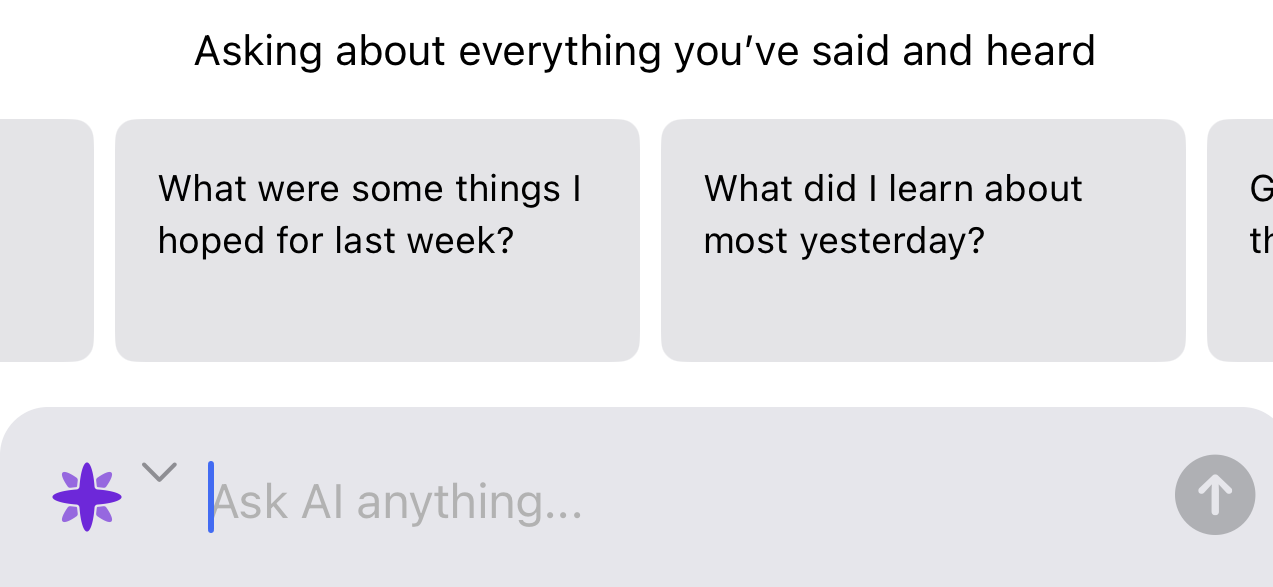
The transcription and voice identification is just ok (it randomly adds people to my household), but what surprised me the most was the prompts – it wasn’t just to ask me to summarize my to-dos or the people I met, but it was actively prompting me into coaching:
Anyone who has parented young children before knows how hard and long the days can be – and more importantly how difficult it can be to identify what you did well when you are exhausted at the end of the day. But it provided coaching on parenting, my interaction with my kids, but importantly, reminded me what I did right:.
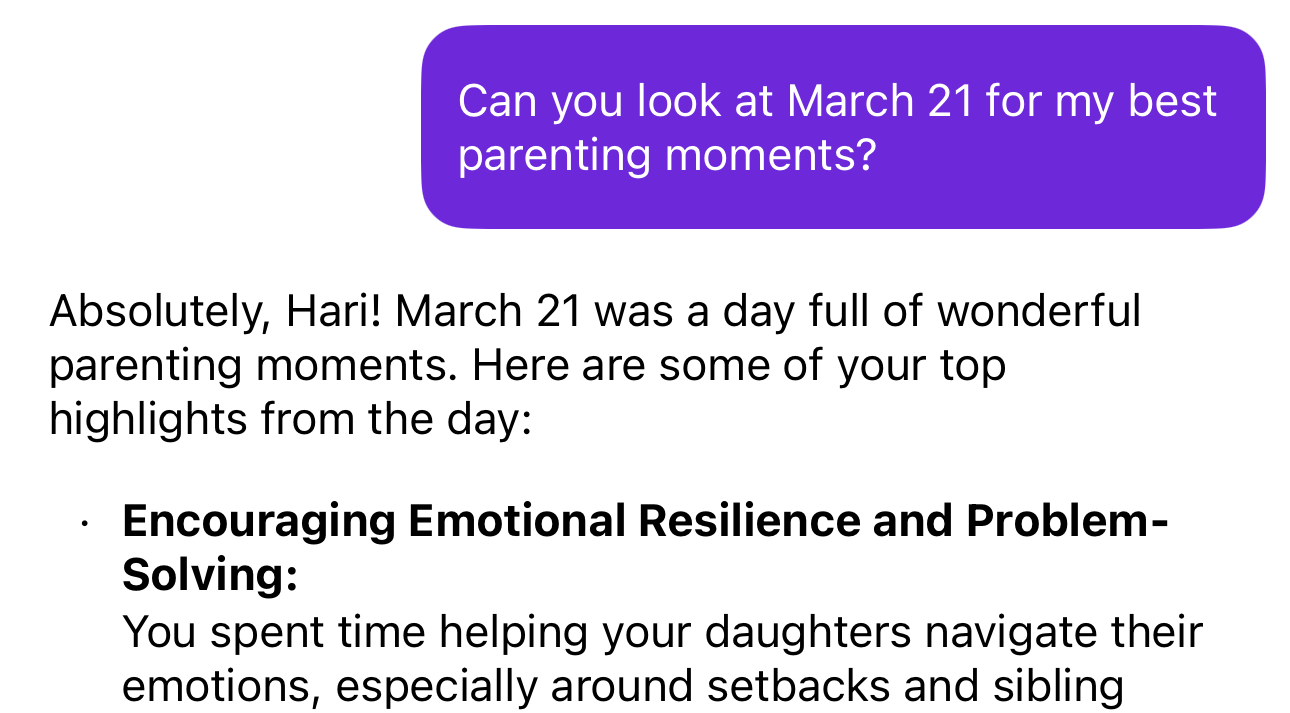
Because it had listened to a full context of my day, all my interactions, all of my times when I was alone, when I was with people – it had (in the hours that I used the tool) – a better understanding of me than any other AI tool that I had used. It provided the most unbiased parenting coaching I had received – something I did not know I needed until I had it.
Is this good?
Potentially?
Let’s take a step back from this question and ask how are people using AI today? The answer is there has been a marked shift from AI-as-a-reference to AI-as-a-sounding-board.
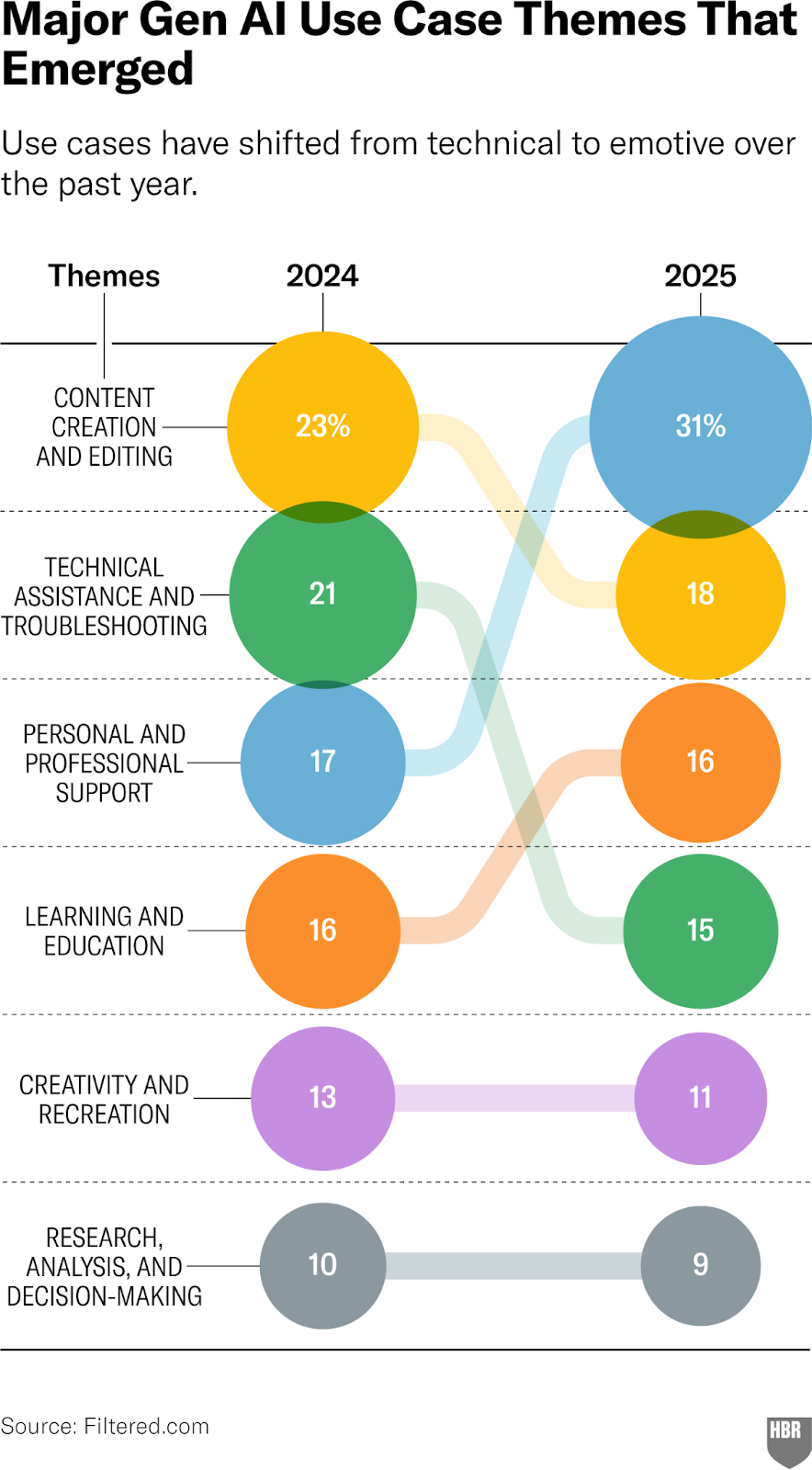
The rise of ChatGPT as a therapist for Gen Z or as a dating companion is growing – because it takes on high-cost activities (dating, therapy) and delivers them in “good enough” ways. Hallucinations are okay in this model as they don’t have to be decisive, but rather they need to “nudge.” I don’t need my therapist to tell me exactly what to do, but rather I need them to tell me that my concerns are valid and move me in the right direction.
Now the key question is now: should AI be able to “nudge?” Do they have enough expertise to help guide you through your interpersonal relationships? Sam Altman recently said – well, not really. ChatGPT (and likely other AI tools) are probably too sycophantic in their current states to be any good at this today. But, potentially, a model that is tuned to you or to people like you, might be able to motivate you to workout more, help run through scenarios with your boss, and be a simulation partner for those who are most anxious among us (e.g., me).
The promise of continuous coaching
The place where you can see this impact taking hold is in a high-cost “nudge” space that impacts the working environment – managing and executive coaching – a business that used to be reserved for the top executives is now readily accessible to many, and is exploding (This market is forecast to expand from a value of USD 2.2 billion in 2022 to 6.8 billion by 2031, which equals an annual growth rate of 13.4%).
One of the issues of coaching and therapy is that, inherently, you get a one-sided view (narrative bias). But with active coaching that follows your actions, words, even keystrokes – you get a better, if more invasive) view of the worker.
Startups and Enterprises alike have been leaders in the tracking space today, though many are ill-fated: Optifye.AI, productivity tracking tools, and Amazon’s “rates.” The idea that individuals now can utilize existing tracking to better understand their own lives.
This future isn’t too far fetched – Whoop’s strain score or FitBit’s sleep score already try to measure and quantify how good the activity you did was. But imagine a device that could tell you in real-time when you were unlikely to perform well and pre-scheduled your day based on your language cues. Limitless’s promise isn’t that it is just listening, but that you are building your own LLM about the events that trigger you (as referenced above, mine is kids asking for snacks).
A framework to think about where this goes next?
A good way to think about AI in how many people use it today – is as a summary tool. It is AI’s most basic function. But this new tool contemplates “AI as nudge” – a continually coaching tool that slowly moves you in the directions of the things that you should be doing.
We’ve had tools like this before (Apple Watch’s Stand Reminder) – but it was not nearly as dynamic as continuous AI coaching could be. The next would be true automation – instead of just pointing me in the right direction, rather it takes the right action – at first for the small things (sending email replies) then for the large things (autonomous purchases of a home? A car?).
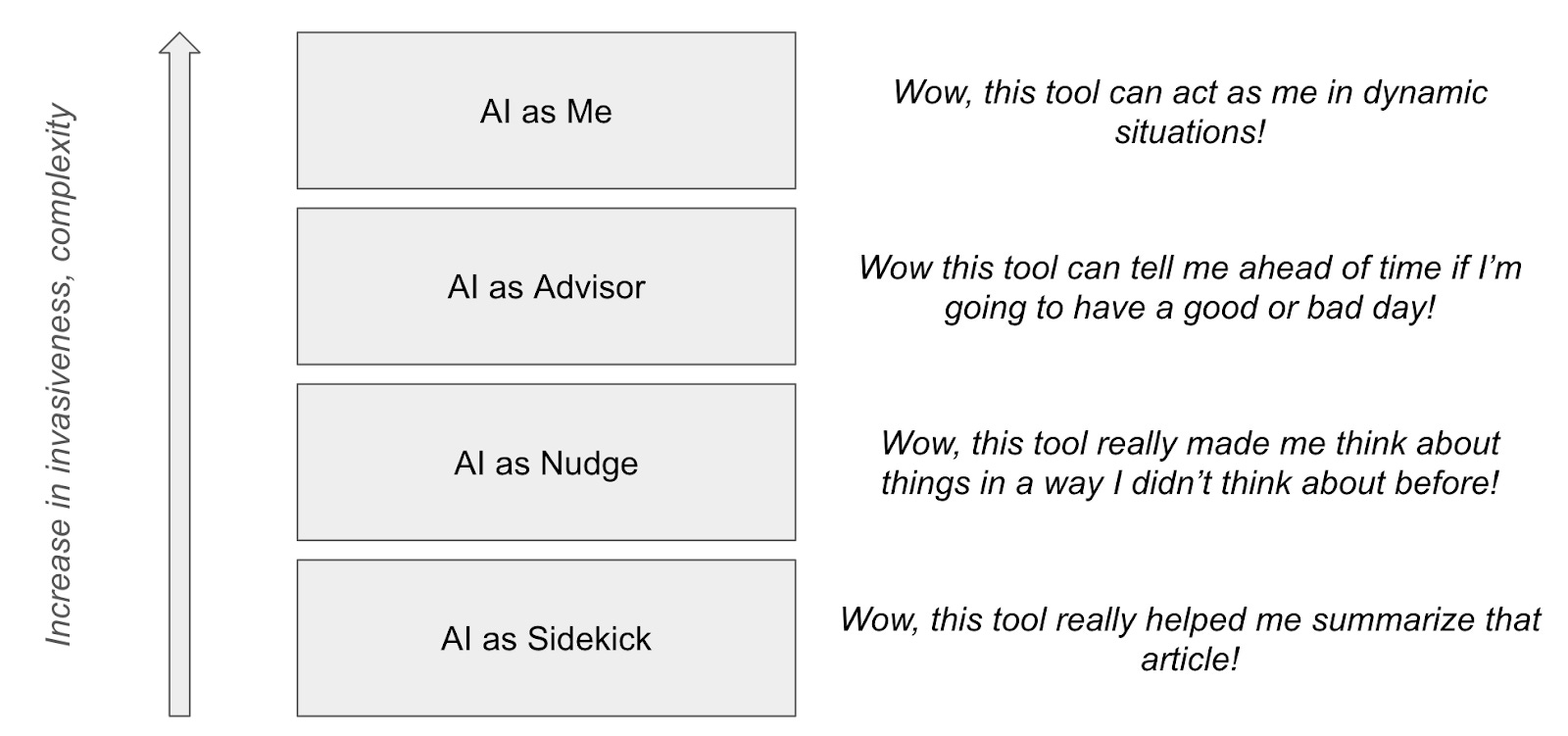
The big thing in this model is that it is critical to own the data / model that describes you – the failures of existing tools as evidenced in the previous section is that it came from an employer to the individual and not the other way around. Awaiting an employer to establish this model will help organizations that have financial incentive to “nudge” you in specific directions.
The concern you should have isn’t that AI won’t be listening — it’s who is nudging you where.
This was concise and smart. Great use of graphics. That last framework was particularly interesting. Good job Hari!